eleven years before the main story
The Hemlock Bluff Shipwreck
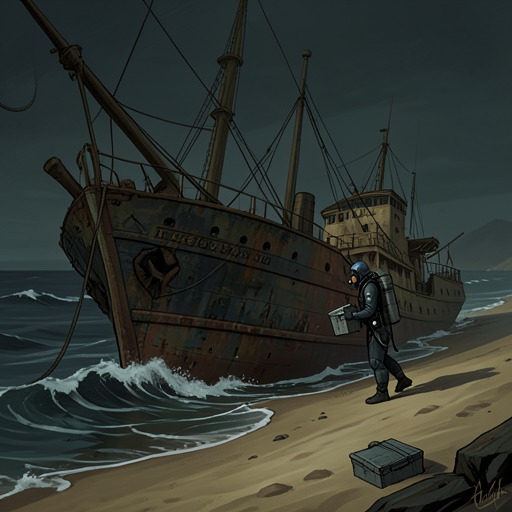
The [Nautilus](entity:object-recall-object-nautilus-0d0ab16044ef) is wrecked during a violent storm near [Hemlock Bluff](entity:location-recall-location-hemlock-bluff-daf93065c9e0). [Laura Stanton](entity:character-recall-character-laura-stanton-b16a0bf39a83) reaches shore alive with her small son [Jack](entity:character-recall-character-jack-b5a26722c3ea), while Jack’s father, [Colonel Stanton](entity:character-recall-character-colonel-stanton-34ca1542e652), is swept away and presumed drowned.
Laura dies two days later without recovering enough to identify herself or explain her family’s history. [Alice Ruthven](entity:character-recall-character-alice-ruthven-eaad0863d862) and [Colonel Martin Ruthven](entity:character-recall-character-colonel-martin-ruth-e9a80418c8bf) take the surviving child into their household, creating the foundation of Jack’s lifelong identity mystery.
about eleven years before the main story
Jack’s Adoption
After Laura’s death, [Alice Ruthven](entity:character-recall-character-alice-ruthven-eaad0863d862) and [Colonel Martin Ruthven](entity:character-recall-character-colonel-martin-ruth-e9a80418c8bf) adopt [Jack](entity:character-recall-character-jack-b5a26722c3ea) and raise him beside their daughter Marion. Jack grows up believing himself to be a Ruthven, loved by Alice as a son and by Marion as a brother.
The adoption gives Jack a secure home but leaves his biological parentage unresolved. The hidden distinction between legal family and blood family later becomes the central pressure point in his conflict with [St. John Ruthven](entity:character-recall-character-st-john-ruthven-e8098e24d67e) and [Dr. Mackey](entity:character-recall-character-dr-mackey-53cbe193d83b).
early in the story
The Encounter on the Bridge
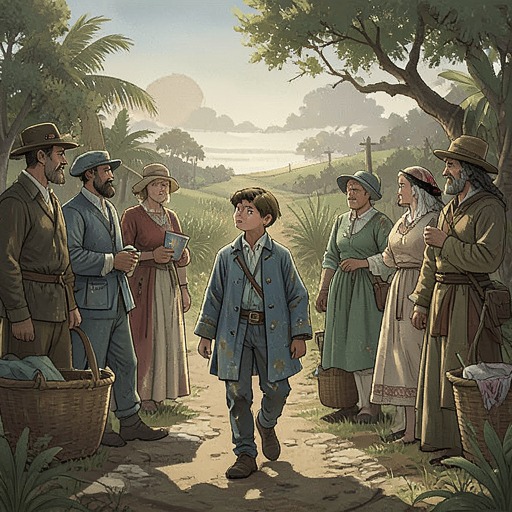
Fourteen-year-old [Jack](entity:character-recall-character-jack-b5a26722c3ea) is fishing on a public bridge when [Dr. Mackey](entity:character-recall-character-dr-mackey-53cbe193d83b), dressed as a Confederate surgeon, demands that he move aside. Jack refuses to be bullied and declines to give the rude stranger directions until the man changes his manner.
The encounter establishes the doctor as hostile, arrogant, and personally threatening. Jack remembers his face, while Dr. Mackey’s interest in the surrounding roads hints that his visit has a concealed purpose.
shortly after the bridge encounter
Darcy Reveals the Rumor
[Darcy Gilbert](entity:character-recall-character-darcy-gilbert-d03982f0580c) tells [Jack](entity:character-recall-character-jack-b5a26722c3ea) that [St. John Ruthven](entity:character-recall-character-st-john-ruthven-e8098e24d67e) has called him a nobody and claimed that he does not truly belong to the Ruthven family. The accusation shocks Jack because he has always understood Alice and Marion to be his mother and sister.
Jack resolves to discover the truth rather than accept either St. John’s insult or Darcy’s reassurance. The rumor transforms a private family secret into an immediate emotional crisis.
the same day as Darcy’s revelation
Jack Learns He Was Adopted
Marion tells [Jack](entity:character-recall-character-jack-b5a26722c3ea) that they are not related by blood and that Alice is his foster mother. She explains that he was found after the shipwreck and adopted when he was three or four years old.
Jack is hurt and bewildered, but Marion insists that he remains her brother in affection and that Alice loves him as completely as if he were her biological son. The disclosure deepens rather than destroys the family bond.
immediately after Jack learns of the adoption
The Exploration of the Wreck
[Jack](entity:character-recall-character-jack-b5a26722c3ea) and Marion row to the wreck on [Hemlock Bluff](entity:location-recall-location-hemlock-bluff-daf93065c9e0) so that he can search for evidence about his parents. They explore the decayed vessel and its empty cabins, finding no immediate identifying papers.
Their investigation turns the wreck from a distant local curiosity into the material site of Jack’s lost history. The ship remains structurally dangerous but still preserves clues that later become decisive.
later that day
The Wreck Lightning Fire
A storm rises while [Jack](entity:character-recall-character-jack-b5a26722c3ea) and Marion are aboard the wreck, and lightning strikes the vessel. Fire begins below the deck, forcing them and [Old Ben](entity:character-recall-character-old-ben-67e2f63ba9bf), who arrives with food, to abandon the ship and shelter beneath an overturned boat.
The fire damages the wreck but does not destroy it. Rain preserves the hidden interior, allowing [Dr. Mackey](entity:character-recall-character-dr-mackey-53cbe193d83b) to search it later and recover the documents that connect Jack to the Stanton inheritance.
shortly after the wreck fire
Alice Shows the Keepsakes
Alice confirms [Jack](entity:character-recall-character-jack-b5a26722c3ea)’s adoption and shows him the objects preserved from the shipwreck: Laura’s lace handkerchief, clothing, and a worn wedding ring whose inscription can barely be read. Jack asks her to keep the ring safe.
The keepsakes provide the first tangible evidence that Jack’s unknown parents were married and belonged to a world beyond the Ruthven plantation. They later allow [Colonel Stanton](entity:character-recall-character-colonel-stanton-34ca1542e652) to identify Laura and Jack with certainty.
soon after Jack learns he was adopted
St. John’s Confrontation with Jack
St. John confronts [Jack](entity:character-recall-character-jack-b5a26722c3ea) on horseback and repeats that he is an upstart who has no rightful place among the Ruthvens. Jack defends Alice, rejects St. John’s contempt, and threatens him with his riding whip.
When St. John attempts to strike back, his frightened horse throws him into bushes. The episode exposes the rivalry’s real motive: St. John fears that Jack’s place in Alice’s affection may reduce the inheritance available to him and Marion.
the same period as the confrontation
Marion Rejects St. John’s Proposal
St. John proposes marriage to Marion, presenting himself as her social equal and implying that he could protect her from [Jack](entity:character-recall-character-jack-b5a26722c3ea). Marion refuses to encourage him and firmly defends Jack as her brother in all meaningful respects.
Her rejection frustrates St. John’s plan to unite the two plantations and secure financial stability through marriage. It also confirms that Marion values loyalty and character above family rank or property.
during the Confederate retreat near Oldville
The Home Guard Forms
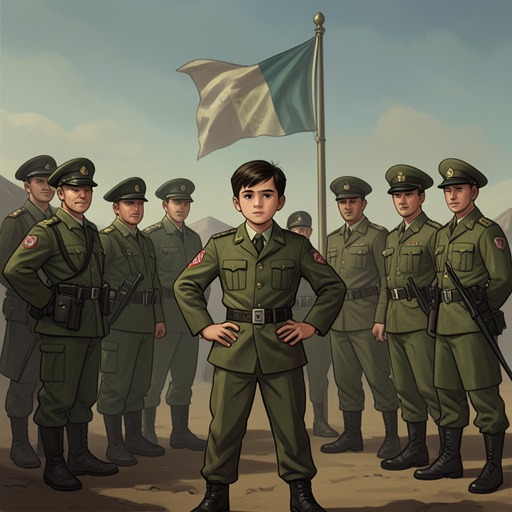
As Union forces press the Confederates toward [Oldville](entity:location-recall-location-oldville-2b2cf22afe3b), [Jack](entity:character-recall-character-jack-b5a26722c3ea) and Darcy organize a company of boys called the [Home Guard](entity:organization-recall-organization-7d2a5c107c30). Jack becomes captain, and the youths drill with unloaded firearms and improvised uniforms.
The company reflects Jack’s longing for military service and his instinctive sense of responsibility. Unlike St. John, who talks about patriotism while avoiding danger, Jack seeks a practical role in protecting his home and neighbors.
a few days after the Home Guard forms
Dr. Mackey Searches the Wreck
[Dr. Mackey](entity:character-recall-character-dr-mackey-53cbe193d83b) persuades [Old Ben](entity:character-recall-character-old-ben-67e2f63ba9bf) to row him to the wreck and then explores it alone. He locates a hidden closet in stateroom fifteen and removes a black tin box containing a marriage certificate, family letters, and papers concerning a large inheritance.
The doctor’s private exclamation that the fortune is his reveals that his interest in [Jack](entity:character-recall-character-jack-b5a26722c3ea) is financial rather than paternal. His claim depends on using Jack as evidence for recovering property connected with the wreck.
immediately after the wreck search
Mackey Claims Jack
[Dr. Mackey](entity:character-recall-character-dr-mackey-53cbe193d83b) visits the Ruthven home and announces that he is [Jack](entity:character-recall-character-jack-b5a26722c3ea)’s father. He claims to have survived the [Nautilus](entity:object-recall-object-nautilus-0d0ab16044ef) disaster, to have spent years in an asylum after being judged insane, and to have only recently learned where the wreck occurred.
Jack is horrified rather than comforted, remembering the doctor’s cruelty on the bridge. Alice and Marion refuse to surrender him merely on Mackey’s word, so the alleged father must establish his identity through legal proof.
the same day as Mackey’s claim
Jack Demands Legal Proof
[Jack](entity:character-recall-character-jack-b5a26722c3ea) tells [Dr. Mackey](entity:character-recall-character-dr-mackey-53cbe193d83b) that he does not acknowledge him as his father and will remain with Alice until a court confirms the claim. Alice promises not to send Jack away without proof, while Mackey insists that a fortune and distinguished family name await the boy.
The confrontation clarifies the moral conflict between coercive blood claims and earned parental love. Jack chooses the mother who raised him over wealth, title, and an unverified biological connection.
during the first battle near the Ruthven Plantation
The Home Guard Defends the Plantation
As Confederate troops retreat and Union forces advance, [Jack](entity:character-recall-character-jack-b5a26722c3ea) calls out the [Home Guard](entity:organization-recall-organization-7d2a5c107c30) to protect the Ruthven home. Guerrillas led by Sandy Barnes attempt to enter and loot the plantation, but Jack’s boys block them and threaten resistance.
[Colonel Stanton](entity:character-recall-character-colonel-stanton-34ca1542e652)’s Federal regiment arrives before violence begins. The colonel orders the guerrillas away and assures Jack that disciplined soldiers will respect private property and the mansion’s use as a hospital.
the day after the first battle
Colonel Stanton’s Visit
[Colonel Stanton](entity:character-recall-character-colonel-stanton-34ca1542e652) visits the Ruthven home with [Harry Powell](entity:character-recall-character-harry-powell-0cfa97531fd6), who is serving as a Union surgeon. Stanton speaks courteously with Alice, rejects the idea that Federal soldiers are inherently brutal, and promises that the plantation will not be mistreated.
[Jack](entity:character-recall-character-jack-b5a26722c3ea) is impressed by Stanton’s humanity despite their opposing uniforms. The visit also establishes the colonel as a figure whose character contrasts sharply with Mackey’s and whose physical resemblance to Jack will later become significant.
during the Federal occupation of the plantation
Harry and Marion Draw Closer
Harry and Marion reminisce in the summerhouse about their childhood intimacy. Their conversation gradually reveals renewed affection, although Marion remains conflicted by Harry’s Union uniform and by the war’s division of their families.
Harry agrees to investigate [Dr. Mackey](entity:character-recall-character-dr-mackey-53cbe193d83b)’s history after recalling that the doctor may have operated a fraudulent medical business in [Philadelphia](entity:location-recall-location-philadelphia-375889b6054c). Their emotional reunion begins the romance that eventually joins the two families after the war.
shortly after Harry’s visit
The Cousins Clash
St. John refuses to shake Harry’s hand because he considers the Union uniform a betrayal. Harry answers that each man must act according to conscience, while St. John continues to defend his own failure to enlist as duty to his mother.
The encounter exposes St. John’s patriotism as largely verbal. In contrast, Harry accepts personal danger for his principles, while Marion and [Jack](entity:character-recall-character-jack-b5a26722c3ea) increasingly judge courage by action rather than political rhetoric.
after the first Federal occupation
St. John Feigns Illness
A local Southern leader summons St. John to enlist, but the prospect terrifies him. He claims sudden illness, takes to bed, and asks his mother to tell the authorities that he would serve if he were physically able.
His family physician recognizes the performance but remains silent. St. John’s cowardice becomes public within the household, strengthening the contrast between his self-interest and [Jack](entity:character-recall-character-jack-b5a26722c3ea)’s willingness to risk himself for others.
during the same period
Walden Exposes Mackey
[George Walden](entity:character-recall-character-george-walden-86eee70f385a), a wounded Confederate soldier recovering at the Ruthven mansion, tells Marion that he knows [Dr. Mackey](entity:character-recall-character-dr-mackey-53cbe193d83b). He insists that Mackey is a bachelor who claimed never to have married and identifies him as a former [Philadelphia](entity:location-recall-location-philadelphia-375889b6054c) medical swindler.
Walden’s testimony gives the family independent grounds to reject Mackey’s story. It also suggests that Mackey wants [Jack](entity:character-recall-character-jack-b5a26722c3ea) because a fortune may be attached to the boy’s unknown identity.
shortly after Walden’s disclosure
The Battle at Larson’s Corners
Mrs. Ruthven and [Jack](entity:character-recall-character-jack-b5a26722c3ea) travel to [Oldville](entity:location-recall-location-oldville-2b2cf22afe3b) while fighting erupts near Larson’s Corners. Jack and Darcy again mobilize the [Home Guard](entity:organization-recall-organization-7d2a5c107c30), intending to protect the town and nearby homes rather than recklessly enter the battle.
The fighting drives soldiers through Oldville and toward the Ruthven plantations. The event expands the war’s pressure on the family and creates the conditions for the burning of St. John’s home and Jack’s later abduction.
during the Battle at Larson’s Corners
The Burning of St. John’s Plantation
When fighting reaches [Mary Ruthven](entity:character-recall-character-mary-ruthven-a503b3361d71)’s plantation, St. John collapses in terror before soldiers, even mistaking friendly Confederates for the enemy. After the troops depart, fire breaks out in the house.
[Jack](entity:character-recall-character-jack-b5a26722c3ea) and the [Home Guard](entity:organization-recall-organization-7d2a5c107c30) organize a bucket line, climb onto the roof, cut an opening, and extinguish the flames. St. John contributes little and even tries to prevent the work, leaving Jack’s courage and practical leadership fully exposed.
at the end of the Battle at Larson’s Corners
Colonel Stanton Is Shot
As Confederate forces pursue the retreating Union regiment, [Jack](entity:character-recall-character-jack-b5a26722c3ea) sees [Colonel Stanton](entity:character-recall-character-colonel-stanton-34ca1542e652) shot and fall from his horse. Although the colonel is his military enemy, Jack is distressed because Stanton has treated the family with unusual fairness.
The wound brings Stanton into the Ruthven household as a patient and creates the circumstances in which his fevered memories of the [Nautilus](entity:object-recall-object-nautilus-0d0ab16044ef) wreck will surface. It also begins the final convergence of Jack’s identity mystery.
immediately after the battle
The Mansion Becomes a Hospital
A cannonball tears through the Ruthven sitting room, injuring [George Walden](entity:character-recall-character-george-walden-86eee70f385a) and damaging the house. Alice and Marion continue treating the wounded, while [Old Ben](entity:character-recall-character-old-ben-67e2f63ba9bf) raises the hospital flag to make the mansion’s protected status unmistakable.
The household’s humanitarian work persists amid battlefield violence. By sheltering wounded men from both danger and neglect, Alice and Marion demonstrate a moral authority that transcends the war’s political divisions.
the night after the battle
Jack Fights the Guerrillas
At the stable, [Jack](entity:character-recall-character-jack-b5a26722c3ea) finds [Old Ben](entity:character-recall-character-old-ben-67e2f63ba9bf) and [Home Guard](entity:organization-recall-organization-7d2a5c107c30) boys resisting guerrillas who are stealing horses. When a guerrilla shoots one of the boys, Jack fires back and wounds the leader; the outlaws flee after injuring Old Ben.
Jack then refuses to abandon the captured guerrilla, giving him food and basic care despite his crimes. [Dr. Mackey](entity:character-recall-character-dr-mackey-53cbe193d83b) soon arrives and recognizes the wounded man as [Pete Gendron](entity:character-recall-character-pete-gendron-60e6c2edbe37), an old associate.
the following night
Mackey Abducts Jack
[Dr. Mackey](entity:character-recall-character-dr-mackey-53cbe193d83b) claims that the wounded Gendron is not a guerrilla and uses his authority to have two Confederate soldiers seize [Jack](entity:character-recall-character-jack-b5a26722c3ea). He orders the boy taken to the [Old Red House](entity:location-recall-location-old-red-house-fd23e61c0402), while falsely telling the household that Jack has gone for an ambulance.
The abduction turns Mackey’s fraudulent claim into open coercion. Jack is no longer merely disputing paternity; he is being physically removed from the family that protects him.
the morning after the abduction
The Search for Jack
Alice, Marion, and [Old Ben](entity:character-recall-character-old-ben-67e2f63ba9bf) discover that [Jack](entity:character-recall-character-jack-b5a26722c3ea) has vanished, while Gendron has also disappeared from the stable. A mountain resident reports seeing Jack held prisoner by men dressed as Confederates.
Old Ben and [Columbus Washington](entity:character-recall-character-columbus-washington-f35cfad05686) follow the trail into the mountains. Their search confirms that Jack’s disappearance is an organized seizure rather than a voluntary departure and keeps the family actively involved in his rescue.
during Jack’s captivity
Stanton’s Fevered Memories
While recovering at the Ruthven home, [Colonel Stanton](entity:character-recall-character-colonel-stanton-34ca1542e652) becomes delirious and cries out about a shipwreck, Laura, and a child named [Jack](entity:character-recall-character-jack-b5a26722c3ea). Alice recognizes the language as matching the story of the boy rescued from the [Nautilus](entity:object-recall-object-nautilus-0d0ab16044ef).
The colonel’s face also bears a striking resemblance to Jack’s. Alice begins to suspect that the Union officer, not [Dr. Mackey](entity:character-recall-character-dr-mackey-53cbe193d83b), is Jack’s true father and arranges for Stanton to remain under her care until he can speak clearly.
two days after Stanton’s fever begins to subside
Stanton Identifies the Keepsakes
Stanton tells Alice that he and his wife Laura sailed on the [Nautilus](entity:object-recall-object-nautilus-0d0ab16044ef) and that he believed both Laura and their son had drowned. When Alice shows him the clothing, handkerchief, and wedding ring preserved from the wreck, he recognizes them as Laura’s and [Jack](entity:character-recall-character-jack-b5a26722c3ea)’s.
He explains that he survived by clinging to a spar, was rescued, and then spent years in an asylum after exposure damaged his mind. The material evidence and his testimony establish Jack as his son beyond reasonable doubt.
during Stanton’s recovery
Mackey’s Past Is Exposed
Stanton reveals that the physician who helped keep him confined in an asylum was a cruel fraud named Mackenzie, Mackwell, or Mackey. The man extracted details about Stanton’s English and Virginia inheritances, then disappeared after learning enough to exploit them.
Alice realizes that [Dr. Mackey](entity:character-recall-character-dr-mackey-53cbe193d83b) has been using the wreck and [Jack](entity:character-recall-character-jack-b5a26722c3ea) to revive claims to property that belongs to the Stanton family. Mackey’s apparent fatherhood is exposed as part of a long-running scheme involving imprisonment, impersonation, and greed.
during Jack’s captivity in the mountain cabin
The Wildcat Attack
[Jack](entity:character-recall-character-jack-b5a26722c3ea) is left bound and nearly starving in the Mountain Prison Cabin. A hungry wildcat enters and prepares to leap at him, but [Old Ben](entity:character-recall-character-old-ben-67e2f63ba9bf) arrives with [Columbus Washington](entity:character-recall-character-columbus-washington-f35cfad05686) and kills the animal at the last moment.
The rescue confirms that Old Ben’s loyalty is not merely inherited from the old plantation order; it is an active bond of affection and courage. Jack is freed, but his attempt to return home immediately leads him into another danger.
immediately after Jack’s release from the cabin
Capture by the Guerrillas
[Jack](entity:character-recall-character-jack-b5a26722c3ea), [Old Ben](entity:character-recall-character-old-ben-67e2f63ba9bf), and Columbus encounter a large band of guerrillas, including the men who originally abducted Jack and [Pete Gendron](entity:character-recall-character-pete-gendron-60e6c2edbe37). The outlaws disarm and bind all three, then carry them to the [Guerrilla Cave](entity:location-recall-location-guerrilla-cave-ce04aeff6afd).
The prisoners are held for two days under brutal conditions while the guerrillas drink, gamble, and wait for [Dr. Mackey](entity:character-recall-character-dr-mackey-53cbe193d83b). Gendron’s remarks reveal that he knows about Mackey’s stolen papers and the fortune behind the scheme.
the third day in the Guerrilla Cave
Mackey Plans Exile
[Dr. Mackey](entity:character-recall-character-dr-mackey-53cbe193d83b) tells [Jack](entity:character-recall-character-jack-b5a26722c3ea) that he intends to take him out of the country by ship, possibly to Europe, and force him to sign documents acknowledging Mackey as his father. He threatens to use force and treats Columbus’s life as expendable because he is Black.
Jack rejects the proposed fortune and refuses to cooperate. His resistance makes clear that moral freedom matters more to him than wealth, while Mackey’s plan becomes an attempted permanent abduction.
that stormy night
Jack Escapes the Cave
A storm and a diversion draw most of the guerrillas away from the cave. [Jack](entity:character-recall-character-jack-b5a26722c3ea) works free of his bonds, releases [Old Ben](entity:character-recall-character-old-ben-67e2f63ba9bf) and Columbus, disarms the remaining guards, and escapes down the mountain.
The escape is both a physical rescue and a moral reversal: the boy who was repeatedly treated as property asserts control over his own fate. The three fugitives begin the difficult journey back toward the Ruthven plantation.
during the escape journey
Mackey and St. John Conspire
Seeking shelter from the storm, [Jack](entity:character-recall-character-jack-b5a26722c3ea) and his companions hide in an abandoned cabin. [Dr. Mackey](entity:character-recall-character-dr-mackey-53cbe193d83b) and St. John arrive and discuss a plan to steal the objects Alice keeps from the shipwreck, which Mackey believes will strengthen his claim to Jack and the inheritance.
Mackey also urges St. John to have [Colonel Stanton](entity:character-recall-character-colonel-stanton-34ca1542e652) arrested as a spy. Hidden above them, Jack learns that St. John is willing to assist Mackey for the prospect of securing Alice’s property.
immediately after St. John leaves the cabin
Jack Captures Mackey
[Jack](entity:character-recall-character-jack-b5a26722c3ea), [Old Ben](entity:character-recall-character-old-ben-67e2f63ba9bf), and Columbus descend from the loft and overpower [Dr. Mackey](entity:character-recall-character-dr-mackey-53cbe193d83b). Jack holds him at gunpoint and orders him bound, intending to take him to the Ruthven plantation and confront him with [Colonel Stanton](entity:character-recall-character-colonel-stanton-34ca1542e652).
Mackey pleads that Jack is his son, but Jack rejects the claim and refuses to let sentimental language erase the doctor’s crimes. The false father is now physically subject to the judgment he had tried to impose on Jack.
at dawn after the cabin confrontation
Jack Returns Home
[Jack](entity:character-recall-character-jack-b5a26722c3ea) reaches the Ruthven mansion with [Dr. Mackey](entity:character-recall-character-dr-mackey-53cbe193d83b) as his prisoner. Alice greets him with relief and tells him that [Colonel Stanton](entity:character-recall-character-colonel-stanton-34ca1542e652) knows Mackey from the asylum and that Mackey is an impostor.
Mackey tries to deny knowing Stanton, but his alarm makes the deception obvious. Alice orders [Old Ben](entity:character-recall-character-old-ben-67e2f63ba9bf) to guard him while she privately tells Jack that Colonel Stanton has been identified as his true father.
later that morning
Father and Son Reunite
Alice brings [Jack](entity:character-recall-character-jack-b5a26722c3ea) to the recovering [Colonel Stanton](entity:character-recall-character-colonel-stanton-34ca1542e652) and explains the evidence linking them. Jack is overwhelmed to learn that the honorable Union officer he admired is his biological father.
When Stanton awakens, he calls Jack his son, and the two embrace. Their reunion resolves the identity mystery while preserving Jack’s gratitude toward Alice, who remains his true mother by love and upbringing.
the same day as the reunion
St. John’s Scheme Collapses
St. John arrives with Confederate soldiers intending to have [Colonel Stanton](entity:character-recall-character-colonel-stanton-34ca1542e652) arrested as a spy. [Jack](entity:character-recall-character-jack-b5a26722c3ea) and Alice confront him with the [capture of Dr. Mackey](entity:action-recall-action-75f57268103b) and reveal that Stanton is Jack’s father and that Mackey is a proven villain.
St. John abandons the arrest rather than face the consequences of his conspiracy. Alice orders him to stay away, ending his access to the household and his hopes of manipulating the inheritance.
the day after Jack returns
The Tin Box Is Recovered
Federal and Confederate forces fight the guerrillas in the mountains, killing Gendron and the men who had held [Jack](entity:character-recall-character-jack-b5a26722c3ea). A search of the outlaws’ camp recovers stolen goods and the black tin box taken from the [Nautilus](entity:object-recall-object-nautilus-0d0ab16044ef) wreck.
The papers are returned to [Colonel Stanton](entity:character-recall-character-colonel-stanton-34ca1542e652), who can now establish his and Jack’s legal claim to the fortune. The physical evidence stolen by Mackey becomes the final instrument of justice against him.
after the Civil War
Mackey Is Imprisoned
Once Stanton recovers, he resigns from the army and prosecutes [Dr. Mackey](entity:character-recall-character-dr-mackey-53cbe193d83b). Mackey is convicted for his fraud, abduction, and related crimes and receives a ten-year prison sentence.
His punishment confirms that the apparent paternal claim was an imposture designed to seize inheritance. [Jack](entity:character-recall-character-jack-b5a26722c3ea)’s refusal to submit to coercion and Alice’s insistence on legal proof prevent Mackey from profiting from the family’s loss.
within a year after the war
The Stanton Fortune Is Recovered
The recovered documents enable [Colonel Stanton](entity:character-recall-character-colonel-stanton-34ca1542e652) and [Jack](entity:character-recall-character-jack-b5a26722c3ea) to obtain the fortune connected with the Stanton family’s English and Virginia property. Their inheritance is valued at approximately one hundred and fifteen thousand dollars.
The money restores the material security stolen from the family by the wreck, Stanton’s confinement, and Mackey’s fraud. Unlike Mackey, Stanton intends the fortune to support family life rather than dominate it.
by the time Stanton recovers fully
The Civil War Ends
The [American Civil War](entity:event-recall-event-american-civil-war-f82854a2d761) ends, bringing relief to Stanton, [Jack](entity:character-recall-character-jack-b5a26722c3ea), Alice, and Marion. The opposing uniforms that shaped their first meetings no longer determine their relationships.
The end of the war allows the household to turn from survival and suspicion toward reconciliation. Jack’s family becomes a living example of bonds that cross the former North–South divide.
about a year after the war
Alice Marries Stanton
[Alice Ruthven](entity:character-recall-character-alice-ruthven-eaad0863d862) marries [Colonel Stanton](entity:character-recall-character-colonel-stanton-34ca1542e652) after his recovery and after the legal restoration of his fortune. The marriage reunites the household’s emotional and biological histories, making Alice once again [Jack](entity:character-recall-character-jack-b5a26722c3ea)’s mother in the formal family sense as well as in affection.
Jack welcomes the marriage because it preserves his bond with Alice while giving him the father he has finally found. Their household becomes a blended family built from adoption, marriage, and recovered blood ties.
at the same double wedding
Marion Marries Harry
At the wedding celebration, Marion marries [Harry Powell](entity:character-recall-character-harry-powell-0cfa97531fd6), whose courage, conscience, and medical service have steadily won her respect and love. Their union resolves the romantic tension introduced by Harry’s Union allegiance and St. John’s failed proposal.
The double marriage binds the former Southern household to a Northern family without erasing the war’s pain. It embodies the novel’s vision of personal affection overcoming sectional hostility.
after the double wedding
St. John’s Decline
St. John’s plantation collapses under his wasteful spending, and [Mary Ruthven](entity:character-recall-character-mary-ruthven-a503b3361d71) must depend on Alice’s charity. St. John leaves for New Orleans and then the West, disappearing from the family’s life.
His downfall completes the moral contrast between inherited status and earned worth. The man who relied on rank, property, and manipulation loses all three, while [Jack](entity:character-recall-character-jack-b5a26722c3ea) prospers through courage, loyalty, and service.
years after the war
Jack Becomes a Soldier
[Jack](entity:character-recall-character-jack-b5a26722c3ea) enters West Point and graduates with high honors, fulfilling the military vocation he had imagined as a boy captain during the war. He later serves at a western fort and earns promotion to colonel through bravery and loyalty.
His career fulfills the novel’s title: Jack becomes truly the son of a soldier, not because of inherited rank alone, but because he proves himself through disciplined service. His identity is finally defined by both family and character.